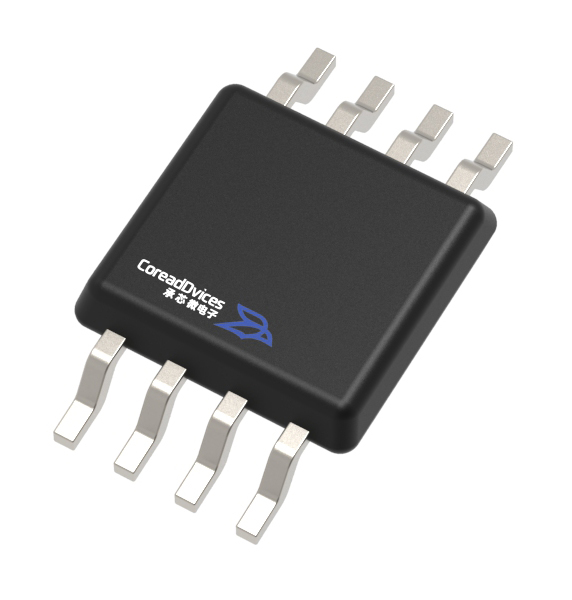
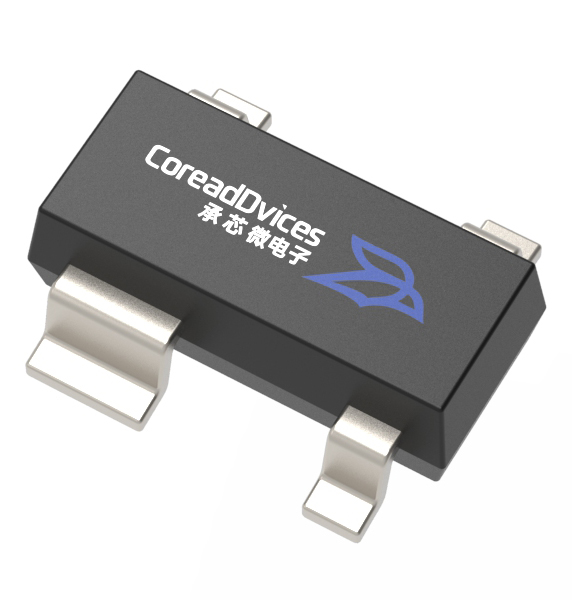
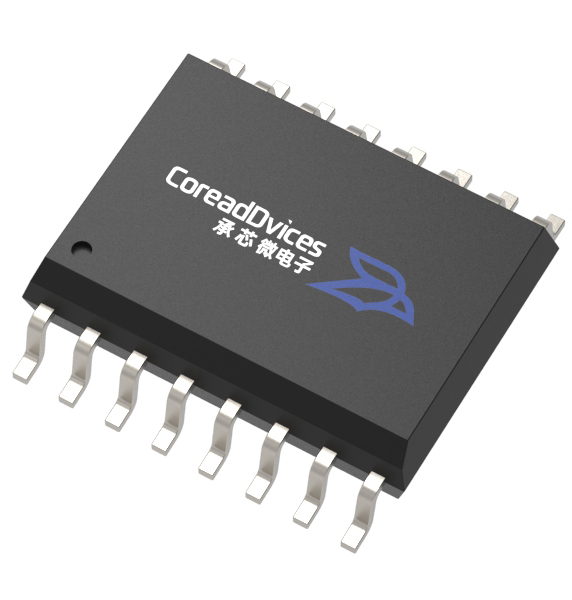

I. Product Overview
In industrial control, instrumentation, and data acquisition systems, many still rely on traditional MCU, DSP, or dedicated processor platforms. While these platforms are mature and stable in computing and control, they often lack native USB capabilities or are entirely absent. Replacing the main controller entirely to add USB interfaces would not only incur high hardware reconstruction costs but also introduce risks of software migration.
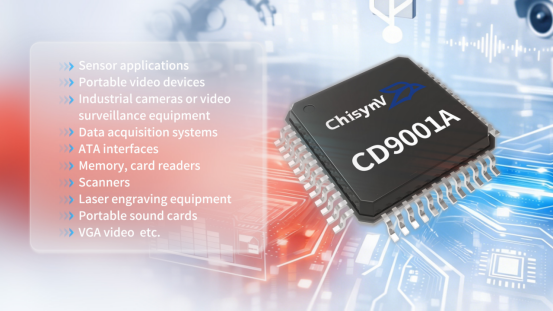
ChisynV’s CD9001A provides an engineering solution for USB capability expansion in traditional embedded platforms. As an embedded USB master/slave controller, it integrates USB functionality into existing systems via a standard 8-bit microprocessor bus interface, enabling USB host or slave capabilities without altering the original architecture. Compliant with USB1.1 standards, the device supports both full-speed 12 Mbps and low-speed 1.5 Mbps transfers, addressing industrial and embedded applications where stability and compatibility are paramount despite moderate speed requirements.
II. Core Features and Practical Value
The CD9001A can be configured as either a USB host or slave device through software control, enabling seamless role switching across the same hardware platform. In host mode, the chip directly manages the USB bus and connects peripherals such as USB drives, card readers, scanners, or sensors. In slave mode, the system itself can function as a USB peripheral, including data acquisition devices, storage units, or audio equipment. This dual-mode design eliminates the need for separate hardware configurations during product development, allowing software-based configuration to support multiple system configurations. This approach significantly reduces costs associated with platform reuse and product derivation.
The chip integrates a USB serial interface engine and USB transceiver, automatically handling Software Over-the-Fiber (SOF) generation, CRC5/CRC16 verification, and full/low-speed device recognition. External systems no longer require additional PHY or protocol processors, as the master controller manages USB transaction control through register and internal RAM operations. This highly integrated architecture shifts USB protocol processing from the system level to the chips internal layer, reducing hardware design complexity and minimizing software debugging dependencies on timing and protocol details, thereby enabling more controllable system development cycles.
The CD9001A connects to external processors via an 8-bit bidirectional parallel data interface, supported by chip select, read/write control, and address line A0 for programming I/O or memory mapping access. Its interface timing is compatible with both Intel and Motorola bus architectures. For traditional MCU and DSP platforms still using parallel bus structures, this interface allows direct integration without additional logic bonding, enabling minimal hardware modifications to add USB functionality while avoiding system-wide reconfiguration caused by interface incompatibility.
The chip integrates 256-byte SRAM for register and USB data buffer management, allocating dedicated memory spaces for registers and data buffers in master and slave modes respectively. It supports ping-pong buffering and automatic address increment mechanisms. During continuous data transfer, the master controller only needs to set the initial address once, enabling sequential data writing or reading to reduce bus access frequency. This buffer and address management approach allows the system to achieve data interaction with minimal control overhead in both full-speed and low-speed USB scenarios, significantly improving overall operational efficiency.
In slave mode, the CD9001A features a DMA interface for block data transfer between external processors and internal RAM. For applications requiring continuous data streams (e.g., scanners or data acquisition), the DMA mechanism significantly reduces CPU involvement, allowing the main controller to allocate more resources to control logic and algorithm processing rather than frequent interrupt handling and data transfer, thereby enhancing operational stability at the system level.
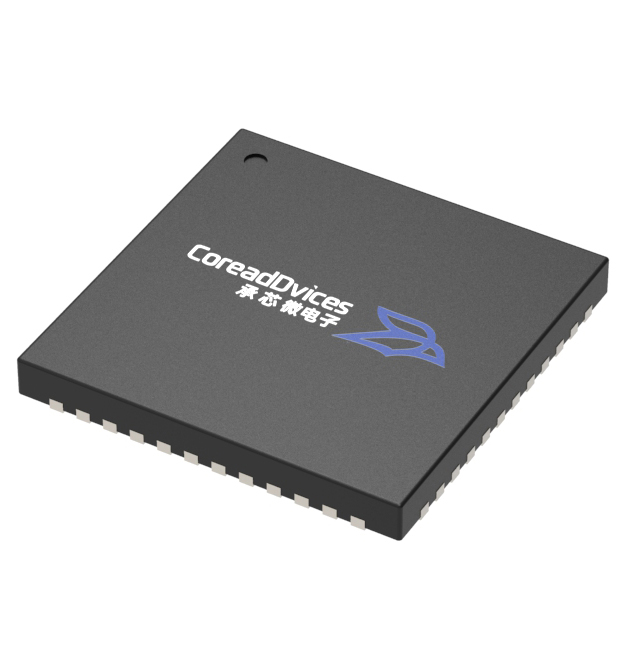
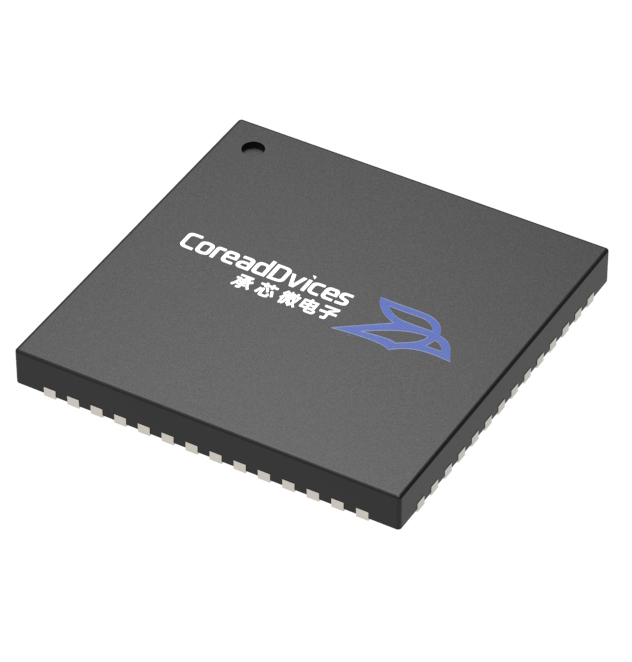
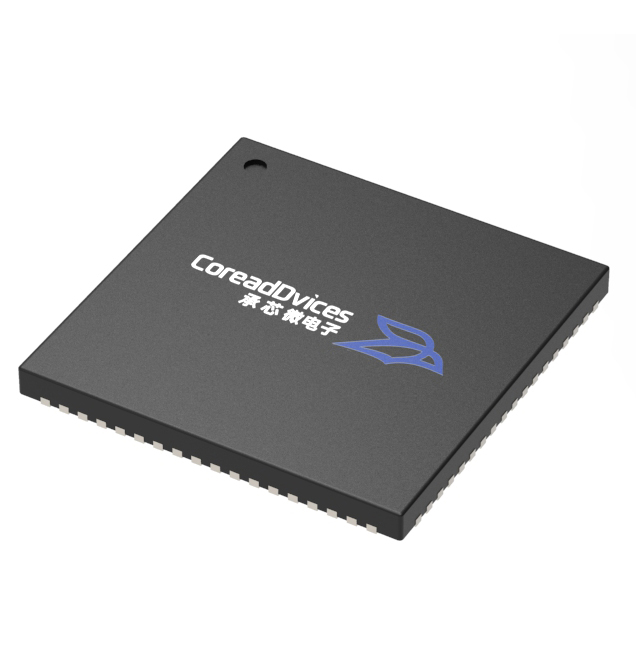
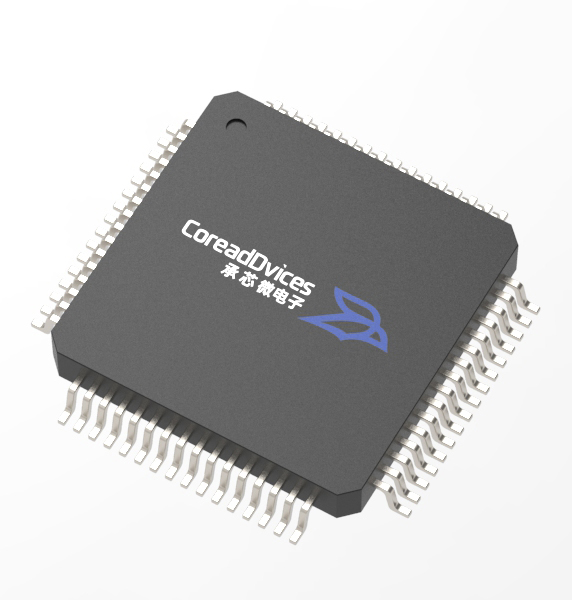
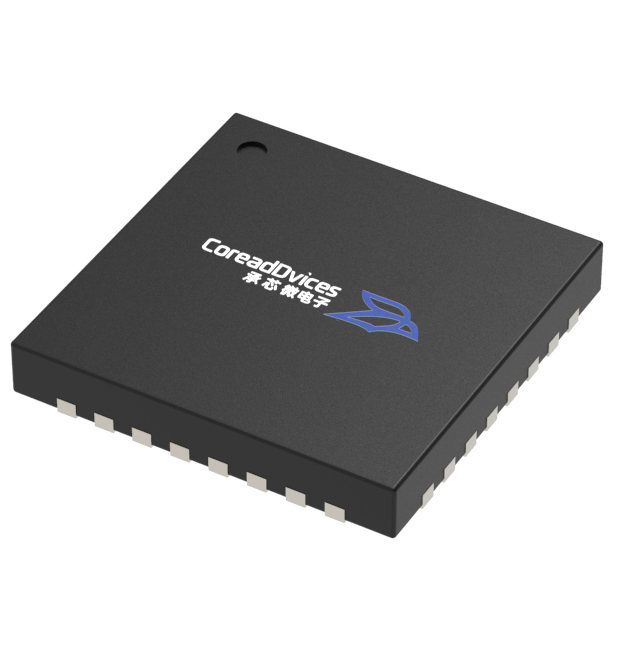
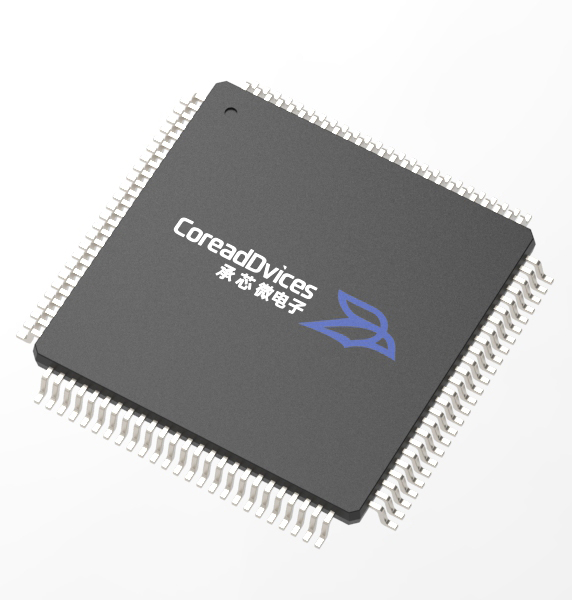
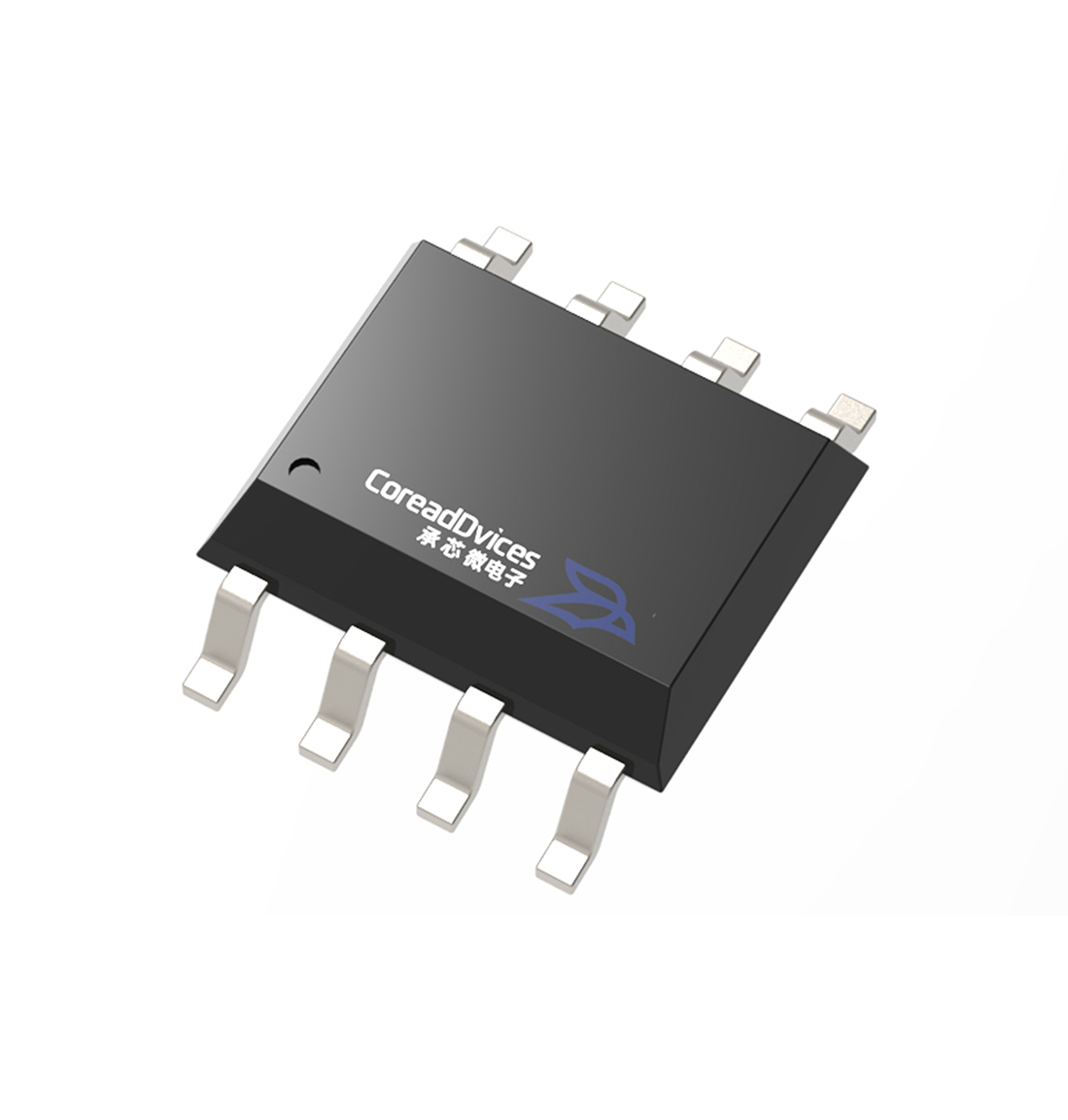
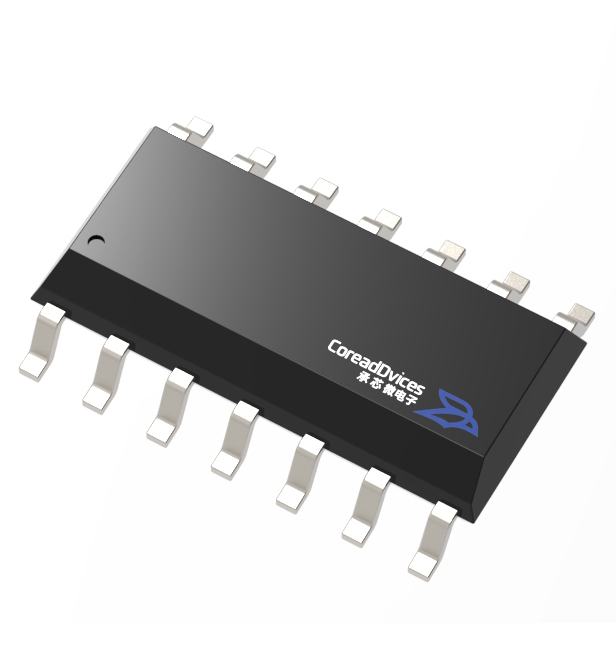
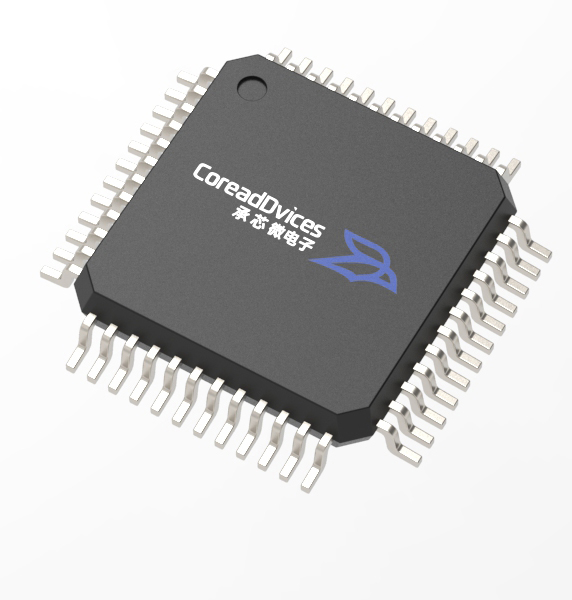
In terms of electrical specifications, the CD9001A operates at 3.3V with 5V I/O tolerance, featuring a 0.35μm CMOS process and 48-pin TQFP package. This power and interface design ensures compatibility with both legacy and modern systems, seamlessly integrating with contemporary 3.3V platforms while supporting traditional 5V logic systems. The solution provides engineers with greater flexibility in project selection.
III. Typical Application Scenarios
1. Sensors and Data Acquisition System
In environmental monitoring, industrial sensors, and testing equipment, the data volume is typically small but requires high stability and reliability. The CD9001As full-speed/low-speed USB capability meets the needs for data upload, parameter configuration, and firmware upgrades while maintaining a simple system architecture.
2. Industrial Cameras and Video Acquisition Devices
For low-speed or control-oriented video acquisition applications, configuration, control, and status monitoring can be performed via USB interface. The CD9001A connects to image processing or control MCUs through a parallel interface, enabling the existing system to add USB communication capabilities without replacing the main controller.
3. Scanners and Industrial Peripheral Devices
Peripheral devices such as scanners and laser engraving equipment require moderate data rates but demand high continuity and reliability. The CD9001As DMA mechanism and internal buffer design facilitate stable data stream transmission.
4. Portable Audio and Instrumentation
USB is commonly used for data transfer, configuration, and upgrades in portable sound cards, MP3 players, and instrumentation. The CD9001A delivers USB functionality with minimal system complexity, making it ideal for cost-sensitive products with extended lifecycles.